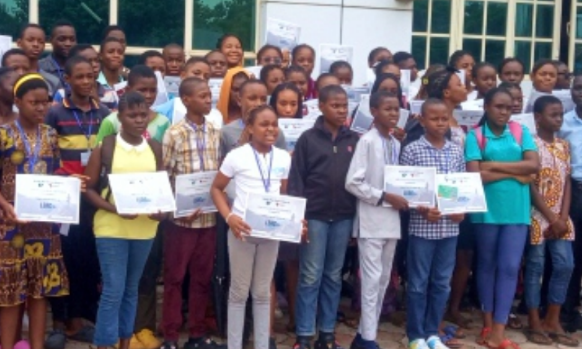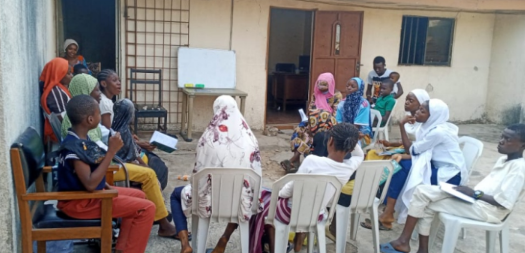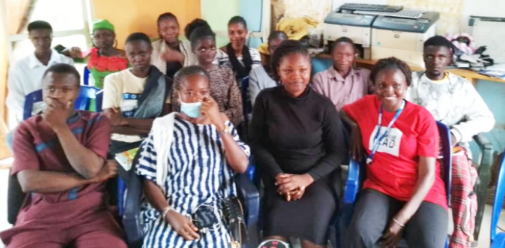
Because of You…
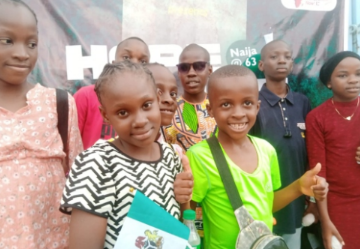
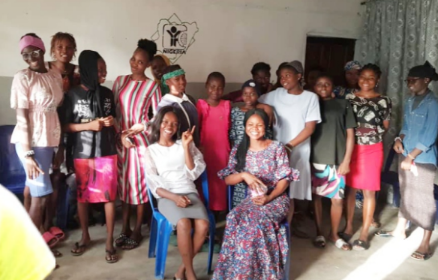
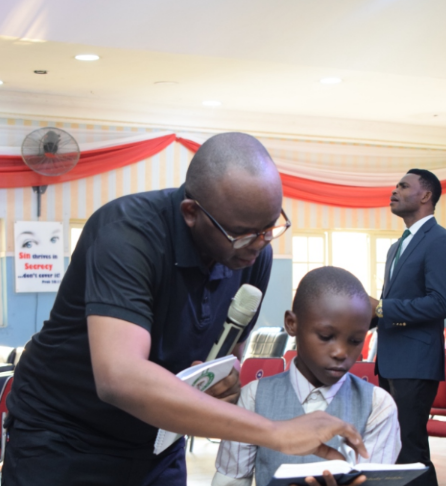
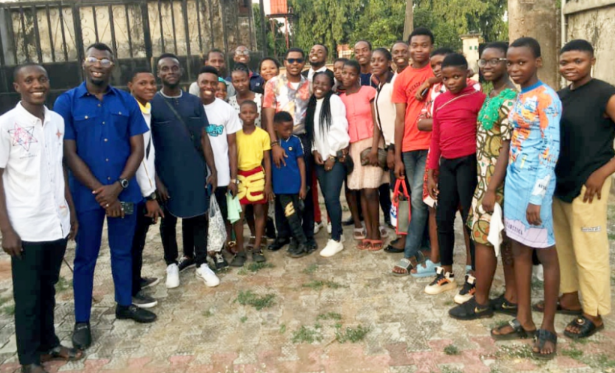
Nigerian youth from 9 states are being reached with the gospel. Youth for Christ has offices in Akure, Asaba, Kaduna, Owerri, & Lagos and are pioneering work in 3 states. The National office and a Resource centre are situated in Akure. There are a total of 18 full time staff and over 32 part time staff serving the Lord in various capacities in the ministry.
Guided by its vision, mission and strategic focus, Youth for Christ is positioned to reach out to the large concentration of young people in Nigeria with the life changing Gospel of Jesus Christ through:
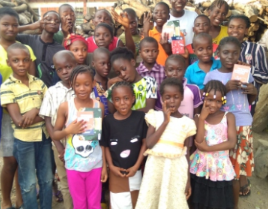
- Evangelism: Outreaches to schools, churches, neighborhoods, and communities
- Discipleship: Young life clubs, mentoring programs, training events, correspondence
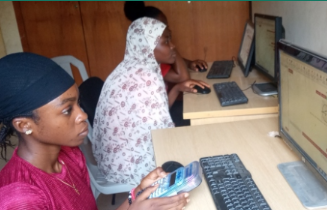
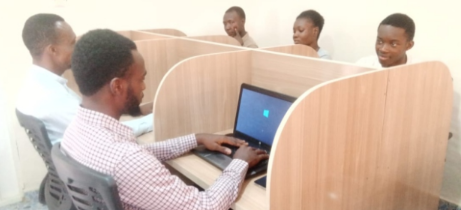
- Social Involvement: HIV/AIDS program, vocational skills acquisition programs, community development projects, life building skills, medical support services, water and sanitation projects, etc.
- Leadership Development Seminars: Leadership Advancement and Development (LEAD), Biblically Oriented Leadership Development (BOLD) seminars and workshops
- Volunteer Development: Project Serve, volunteer retreats, music, drama, choreography, dance, etc.
- Prayer movement: Prayer triplets, lunch hour program, monthly meetings
- Partnership/Networking: Working in partnership with other like-minded persons and organizations including the Government to achieve the ministry goals
Prayer Needs
- Strength and God’s wisdom for the Board, staff and volunteers
- Revival in the lives of the young people in Nigeria who desperately need the touch of the Holy spirit at this time in our nation’s history
- Our nation’s leaders and the people in governance
- Resources to carry out the various activities outlined in our Strategic plan:
- To reach 1 million young people in Nigeria out of the total population of 60 million young people in the country
- To engage 10,000 volunteers in ministry activities
- To develop relationship with 100, 000 partners to support and pray for the ministry
- To pioneer work in 11 more States across the nation bringing the total to 20 states where Youth for Christ has ministry
- To construct the 2.596 hectares Training /Resource centre at Aaye via Akure
About Nigeria
Nigeria

Introduction
British influence and control over what would become Nigeria and Africa's most populous country grew through the 19th century. A series of constitutions after World War II granted Nigeria greater autonomy; independence came in 1960. Following nearly 16 years of military rule, a new constitution was adopted in 1999, and a peaceful transition to civilian government was completed. The government continues to face the daunting task of reforming a petroleum-based economy, whose revenues have been squandered through corruption and mismanagement, and institutionalizing democracy. In addition, Nigeria continues to experience longstanding ethnic and religious tensions. Although both the 2003 and 2007 presidential elections were marred by significant irregularities and violence, Nigeria is currently experiencing its longest period of civilian rule since independence. The general elections of April 2007 marked the first civilian-to-civilian transfer of power in the country's history. In January 2010, Nigeria assumed a nonpermanent seat on the UN Security Council for the 2010-11 term.
Geography
Location
Location: Western Africa, bordering the Gulf of Guinea, between Benin and Cameroon
Geographic Coordinates: 10 00 N, 8 00 E
Area
Total Area: 923,768 sq km Rank: 32
Land Area: 910,768 sq km
Water Area: 13,000 sq km
Comparison: slightly more than twice the size of California
Land Boundaries: 4,047 km
Bordering Countries: Benin 773 km, Cameroon 1,690 km, Chad 87 km, Niger 1,497 km
Coastline: 853 km
Climate
varies; equatorial in south, tropical in center, arid in north
Terrain
southern lowlands merge into central hills and plateaus; mountains in southeast, plains in north
Elevations
Lowest Point: Atlantic Ocean 0 m
Highest Point: Chappal Waddi 2,419 m
Natural Resources
natural gas, petroleum, tin, iron ore, coal, limestone, niobium, lead, zinc, arable land
Land Use
Arable land: 33.02%
Permanent Crops: 3.14%
Other: 63.84% (2005)
Irrigated Land: 2,820 sq km (2003)
Renewable Water Resources: 286.2 cu km (2003)
Total Freshwater withdrawal (domestic/industrial/agricultural): 8.01 cu km/yr (21%/10%/69%)
Freshwater Withdrawal Per Capita: 61 cu m/yr (2000)
Environment
Natural Hazards: periodic droughts; flooding
Environmental Issues: soil degradation; rapid deforestation; urban air and water pollution; desertification; oil pollution - water, air, and soil; has suffered serious damage from oil spills; loss of arable land; rapid urbanization
Environmental Agreements: Party to: Biodiversity, Climate Change, Climate Change-Kyoto Protocol, Desertification, Endangered Species, Hazardous Wastes, Law of the Sea, Marine Dumping, Marine Life Conservation, Ozone Layer Protection, Ship Pollution, Wetlands
Geography Notes
the Niger enters the country in the northwest and flows southward through tropical rain forests and swamps to its delta in the Gulf of Guinea
People
Population: 149,229,090 Rank: 8
Note: estimates for this country explicitly take into account the effects of excess mortality due to AIDS; this can result in lower life expectancy, higher infant mortality, higher death rates, lower population growth rates, and changes in the distribution of population by age and sex than would otherwise be expected (July 2010 est.)
Age Structure
0-14 years: 41.5% (male 31,624,050/female 30,242,637)
15-64 years: 55.5% (male 42,240,641/female 40,566,672)
65 years and over: 3.1% (male 2,211,840/female 2,343,250) (2010 est.)
Median Age: 19 years
Population Growth
Growth Rate: 1.999% (2010 est.) Rank: 61
Birth Rate: 36.65 births/1,000 population (2010 est.) Rank: 28
Death Rate: 16.56 deaths/1,000 population (July 2010 est.) Rank: 9
Net Migration Rate: -0.1 migrant(s)/1,000 population (2010 est.) Rank: 90
Urbanization
Urban Population: 48% of total population (2008)
Rate of Urbanization: 3.8% annual rate of change (2005-10 est.)
Life and Death
Infant Mortality Rate: 94.35 deaths/1,000 live births Rank: 11
Life Expectancy at Birth: 46.94 years Rank: 216
Fertility Rate: 4.82 children born/woman (2010 est.) Rank: 31
Health and Disease
HIV/AIDS - Adult Prevalence Rate: 3.1% (2007 est.) Rank: 23
People living with HIV/AIDS: 2.6 million (2007 est.) Rank: 3
HIV/AIDS Deaths: 170,000 (2007 est.) Rank: 3
Degree of Risk for Major Infectious Diseases: very high
Food or waterborne diseases: bacterial and protozoal diarrhea, hepatitis A and E, and typhoid fever
Vectorborne disease: malaria and yellow fever
Respiratory Disease: meningococcal meningitis
Water Contact Diseases: leptospirosis and shistosomiasis
Animal Contact Diseases: rabies
Note: highly pathogenic H5N1 avian influenza has been identified in this country; it poses a negligible risk with extremely rare cases possible among US citizens who have close contact with birds (2009)
Nationality and Culture
Noun: Nigerian(s)
Adjective: Nigerian
Ethnic Groups: Nigeria, Africa's most populous country, is composed of more than 250 ethnic groups; the following are the most populous and politically influential: Hausa and Fulani 29%, Yoruba 21%, Igbo (Ibo) 18%, Ijaw 10%, Kanuri 4%, Ibibio 3.5%, Tiv 2.5%
Religion: Muslim 50%, Christian 40%, indigenous beliefs 10%
Languages: English (official), Hausa, Yoruba, Igbo (Ibo), Fulani
Education
Literacy (Meaning, age 15 and over can read and write): 68% Male: 75.7% Female: 60.6% (2003 est.)
School life expectancy (primary to tertiary education): 8 years Male: 9 years Female: 7 years (2004)
Education expenditures: 0.9% of GDP (1991) Rank: 180
Government
Country Name
Conventional Long Form: Federal Republic of Nigeria
Conventional Short Form: Nigeria
Government Type: federal republic
Capital: Abuja Geographic Coordinates: 9 05 N, 7 32 E
Administrative divisions
36 states and 1 territory*; Abia, Adamawa, Akwa Ibom, Anambra, Bauchi, Bayelsa, Benue, Borno, Cross River, Delta, Ebonyi, Edo, Ekiti, Enugu, Federal Capital Territory*, Gombe, Imo, Jigawa, Kaduna, Kano, Katsina, Kebbi, Kogi, Kwara, Lagos, Nassarawa, Niger, Ogun, Ondo, Osun, Oyo, Plateau, Rivers, Sokoto, Taraba, Yobe, Zamfara
Independence: 1 October 1960 (from the UK)
National holiday: Independence Day (National Day), 1 October (1960)
Constitution: adopted 5 May 1999; effective 29 May 1999
Legal system: based on English common law, Islamic law (in 12 northern states), and traditional law; accepts compulsory ICJ jurisdiction with reservations
Suffrage: 18 years of age; universal
Executive Branch
Chief of State: President Goodluck JONATHAN (since 5 May 2010, acting since 9 February 2010); note - the president is both the chief of state and head of government; JONATHAN assumed the presidency on 5 May 2010 following the death of President YAR'ADUA, he was declared Acting President on 9 February 2010 by the National Assembly during the extended illness of the former president
Head of Government: President Goodluck JONATHAN (since 5 May 2010, acting since 9 February 2010)
Cabinet: Federal Executive Council
Elections: president elected by popular vote for a four-year term (eligible for a second term); election last held on 21 April 2007 (next to be held on 22 January 2011)
Election Results: Umaru Musa YAR'ADUA elected president; percent of vote - Umaru Musa YAR'ADUA 69.8%, Muhammadu BUHARI 18.7%, Atiku ABUBAKAR 7.5%, Orji Uzor KALU 1.7%, other 2.3%
Legislative Branch
bicameral National Assembly consists of the Senate (109 seats, 3 from each state plus 1 from Abuja; members elected by popular vote to serve four-year terms) and House of Representatives (360 seats; members elected by popular vote to serve four-year terms)
Elections: Senate - last held on 21 April 2007 (next to be held in April 2011); House of Representatives - last held on 21 April 2007 (next to be held on 15 January 2011)
Election Results: Senate - percent of vote by party - NA; seats by party - PDP 85, ANPP 16, AC 6, PPA 1, ACCORD 1; House of Representatives - percent of vote by party - PDP 65.1%, ANPP 21.6%, AC 8.8%, PPA 0.8%, LP 0.8%; seats by party - PDP 263, ANPP 63, AC 30, PPA 3, LP 1
Judicial branch
Supreme Court (judges recommended by the National Judicial Council and appointed by the president); Federal Court of Appeal (judges are appointed by the federal government from a pool of judges recommended by the National Judicial Council)
Politics
Political Parties and Leaders: Accord Party [Augustine MAZIE, acting]; Action Congress or AC [Bisi AKANDE]; All Nigeria Peoples Party or ANPP [Edwin UME-EZEOKE]; All Progressives Grand Alliance or APGA [Victor C. UMEH]; Alliance for Democracy or AD [Mojisoluwa AKINFENWA]; Conference of Nigerian Political Parities or CNPP [Abdulkadir Balarabe MUSA]; Democratic Peoples Party or DPP [Jeremiah USENI]; Fresh Democratic Party [Chris OKOTIE]; Labor Party [Dan NWANYANWU]; National Democratic Party or NDP [Aliyu Habu FARI]; Peoples Democratic Party or PDP [Vincent OGBULAFOR]; Peoples Progressive Alliance [Larry ESIN]
Political Pressure Groups and Leaders: Academic Staff Union for Universities or ASUU; Campaign for Democracy or CD; Civil Liberties Organization or CLO; Committee for the Defense of Human Rights or CDHR; Constitutional Right Project or CRP; Human Right Africa; National Association of Democratic Lawyers or NADL; National Association of Nigerian Students or NANS; Nigerian Bar Association or NBA; Nigerian Labor Congress or NLC; Nigerian Medical Association or NMA; the press; Universal Defenders of Democracy or UDD
International Organization Participation: ACP, AfDB, AU, C, D-8, ECOWAS, FAO, G-15, G-24, G-77, IAEA, IBRD, ICAO, ICC, ICCt, ICRM, IDA, IDB, IFAD, IFC, IFRCS, IHO, ILO, IMF, IMO, IMSO, Interpol, IOC, IOM, IPU, ISO, ITSO, ITU, ITUC, MIGA, MINURCAT, MINURSO, MONUC, NAM, OAS (observer), OIC, OPCW, OPEC, PCA, UN, UN Security Council (temporary), UNAMID, UNCTAD, UNESCO, UNHCR, UNIDO, UNMIL, UNMIS, UNOCI, UNWTO, UPU, WCO, WFTU, WHO, WIPO, WMO, WTO
Flag Description: three equal vertical bands of green (hoist side), white, and green; the color green represents the forests and abundant natural wealth of the country, white stands for peace and unity
Economy
Economy Overview: Oil-rich Nigeria, long hobbled by political instability, corruption, inadequate infrastructure, and poor macroeconomic management, has undertaken several reforms over the past decade. Nigeria's former military rulers failed to diversify the economy away from its overdependence on the capital-intensive oil sector, which provides 95% of foreign exchange earnings and about 80% of budgetary revenues. Following the signing of an IMF stand-by agreement in August 2000, Nigeria received a debt-restructuring deal from the Paris Club and a $1 billion credit from the IMF, both contingent on economic reforms. Nigeria pulled out of its IMF program in April 2002, after failing to meet spending and exchange rate targets, making it ineligible for additional debt forgiveness from the Paris Club. Since 2008 the government has begun showing the political will to implement the market-oriented reforms urged by the IMF, such as to modernize the banking system, to curb inflation by blocking excessive wage demands, and to resolve regional disputes over the distribution of earnings from the oil industry. In 2003, the government began deregulating fuel prices, announced the privatization of the country's four oil refineries, and instituted the National Economic Empowerment Development Strategy, a domestically designed and run program modeled on the IMF's Poverty Reduction and Growth Facility for fiscal and monetary management. In November 2005, Abuja won Paris Club approval for a debt-relief deal that eliminated $18 billion of debt in exchange for $12 billion in payments - a total package worth $30 billion of Nigeria's total $37 billion external debt. The deal subjects Nigeria to stringent IMF reviews. Based largely on increased oil exports and high global crude prices, GDP rose strongly in 2007-09. President YAR'ADUA has pledged to continue the economic reforms of his predecessor with emphasis on infrastructure improvements. Infrastructure is the main impediment to growth. The government is working toward developing stronger public-private partnerships for electricity and roads.
Gross Domestic Product
GDP (purchasing power parity): $339 billion (2009 est.) Rank: 33
GDP - real growth rate: 6.1% (2009 est.) Rank: 17
GDP - per capita (PPP): $2,300 (2009 est.) Rank: 182
GDP - Composition by Sector: Agriculture: 33.1% Industry: 33.8% Services: 33.1% (2009 est.)
Labor Force
Labor Force: 47.33 million (2009 est.) Rank: 12
Labor force - by occupation: Agriculture: 70% Industry: 10% Services: 20% (1999 est.)
Unemployment Rate: 4.9% (2007 est.) Rank: 44
Poverty
Population below poverty line: 70% (2007 est.)
$12.86 billion (31 December 2008 est.)
under 914 m:
2 (2010)
Transnational Issues
International Disputes: Joint Border Commission with Cameroon reviewed 2002 ICJ ruling on the entire boundary and bilaterally resolved differences, including June 2006 Greentree Agreement that immediately cedes sovereignty of the Bakassi Peninsula to Cameroon with a phase-out of Nigerian control within two years while resolving patriation issues; the ICJ ruled on an equidistance settlement of Cameroon-Equatorial Guinea-Nigeria maritime boundary in the Gulf of Guinea, but imprecisely defined coordinates in the ICJ decision and a sovereignty dispute between Equatorial Guinea and Cameroon over an island at the mouth of the Ntem River all contribute to the delay in implementation; only Nigeria and Cameroon have heeded the Lake Chad Commission's admonition to ratify the delimitation treaty which also includes the Chad-Niger and Niger-Nigeria boundaries
Refugees and internally displaced persons - refugees (country of origin): 5,778 (Liberia)
International Displaced Persons: undetermined (communal violence between Christians and Muslims since President OBASANJO's election in 1999; displacement is mostly short-term) (2007)